


January 30, 2026 | 42 views
“Only about three in ten learners in Teso exit primary school academically prepared for secondary education, compared to more than half nationally,” the letter states.
By Our Reporter I Ngariam Focus
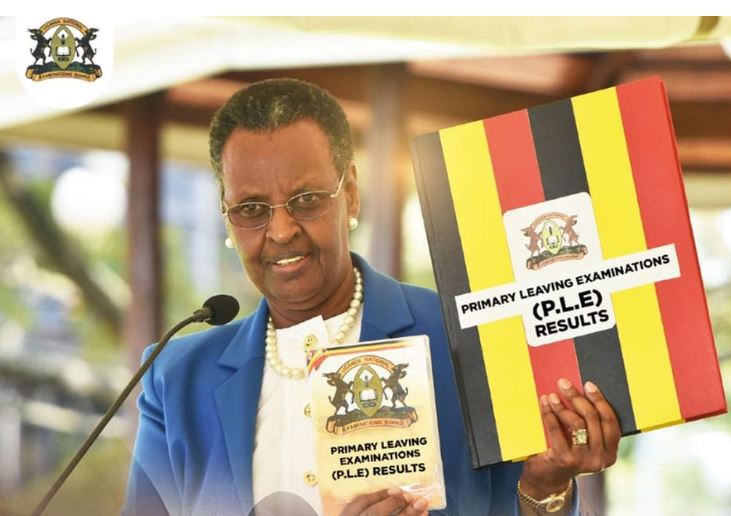
SOROTI/KAMPALA— The release of the 2025 Primary Leaving Examination (PLE) results has reignited debate on learning inequality in Uganda’s education system, with the Ateker Professionals Initiative for Development (APID) warning that persistent regional disparities threaten the future of learners in disadvantaged sub-regions, particularly Teso.
In a strongly worded open letter dated January 30, 2026, addressed to the Minister of Education and Sports, APID chairperson Ruth Obaikol urged government to move beyond celebration of top performers and confront what she described as “uncomfortable truths” revealed by the national results.
Unequal Outcomes Behind National Progress
While acknowledging Uganda’s progress in expanding access to primary education, APID argues that learning outcomes remain deeply unequal across regions and districts. Nationally, only a small proportion of candidates attain Division One, while a large number fall into Divisions Three and Four.
More concerning, according to the letter, is the geographic concentration of low performance, with certain sub-regions consistently underrepresented among top performers and overrepresented among learners at risk of exclusion.
Teso Sub-Region in Sharp Focus
APID highlights the Teso sub-region—including Amuria, Katakwi, Kaberamaido, Kumi, Ngora, Serere, and Soroti—as a stark example of systemic disadvantage.
“Only about three in ten learners in Teso exit primary school academically prepared for secondary education, compared to more than half nationally,” the letter states.
Over half of candidates from the sub-region cluster in Divisions Three and Four, with a higher-than-average proportion in Division U or X.
APID stresses that these outcomes should not be blamed on children, parents, or teachers, but instead reflect long-standing structural challenges.
Structural Barriers, Not Individual Failure
The letter points to shortages of qualified teachers, high pupil-teacher ratios, inadequate instructional materials, poverty, food insecurity, and limited access to supportive learning environments as compounding factors that undermine performance over time.
“An examination system can only measure what the system itself has enabled learners to achieve,” Obaikol writes, describing PLE 2025 as a test not just of learners, but of how equitably opportunity is distributed in Uganda.
Warnings on the Cost of Inaction
APID cautions that if current patterns persist, the consequences will be severe. Large numbers of learners will transition to secondary school ill-prepared to cope with the curriculum, while dropout rates are likely to remain highest in already disadvantaged regions.
The organisation warns that cycles of poverty and exclusion will continue to reproduce themselves through education.
Five Key Recommendations
To reverse the trend, APID calls on the Ministry of Education and Sports to take urgent, equity-focused action, including:
- Adopting equity-based financing and planning that directs additional resources to consistently underperforming regions and districts;
- Strengthening early-grade literacy and numeracy interventions to prevent learning deficits from compounding;
- Introducing structured bridging and remedial programmes for learners in Divisions Three and Four, instead of treating PLE as a terminal sorting mechanism;
- Enhancing incentives and support for teachers working in hard-to-reach and historically marginalised areas;
- Using PLE data proactively as a diagnostic tool for system improvement, not merely for ranking schools and regions.
A Call for Fairness, Not Sympathy
APID concludes by appealing for decisive political will, arguing that education reform must place equity alongside access as a central pillar.
“The children of Teso—and of all similarly disadvantaged regions—do not ask for sympathy,” the letter reads. “They ask for fairness, investment, and a system that recognises their potential.”
As the nation reflects on the 2025 PLE results, APID’s message adds pressure on policymakers to ensure future examinations tell a story not of persistent inequality, but of shared national progress.
Related News


Advertisement

Advertisement
News Updates




Advertisement