
February 13, 2026 | 3 views
KAMPALA-A total of 432,163 candidates from 3,975 examination centres registered for the UCE 2025 examination, compared to 359,417 candidates in 2024, an increase of 72,746 (20.2 per cent).
At least 99.6% of the candidates who sat the 2025 Uganda Certificate of Education exams have passed, the results released on Friday indicated.
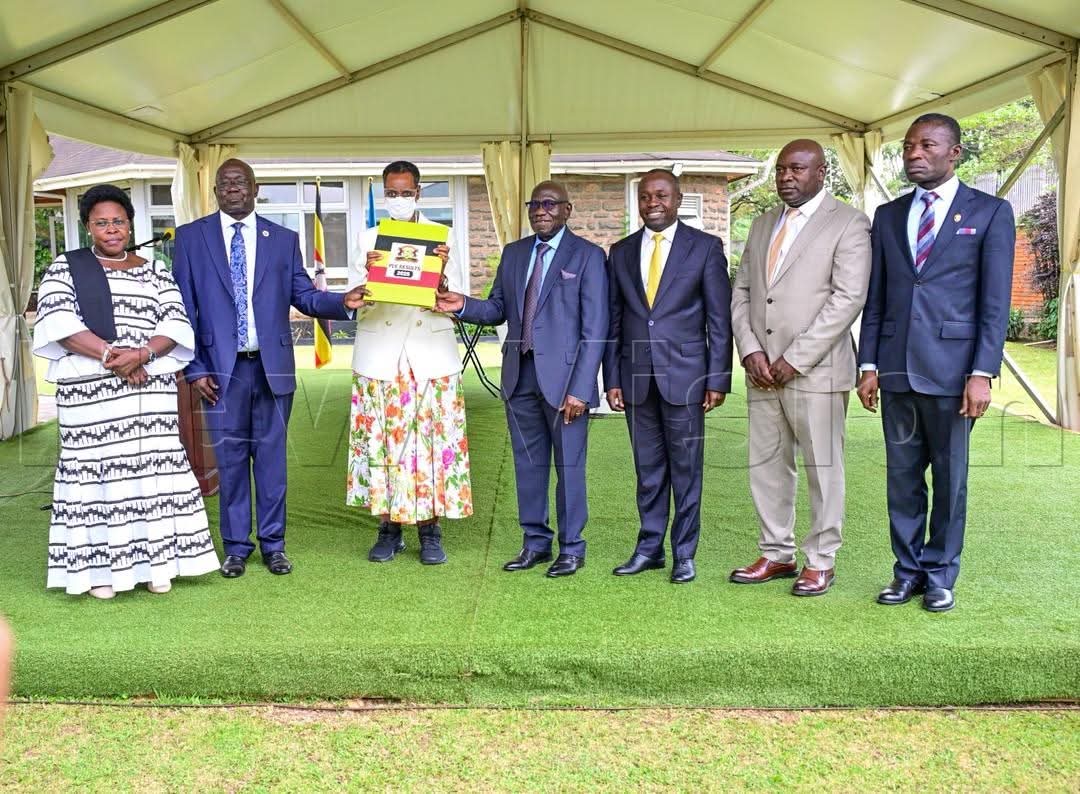
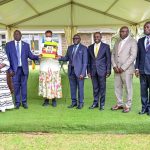
The results were released by the First Lady Janet Museveni wo also doubles as the Minister for Education and Sports, Janet Museveni at State House in Nakasero.
Under the new competency based curriculum, any candidate who has qualified for the UCE certificate has passed and this will be indicated on their transcript and certificate as result 1.
For those who don’t pass and don’t qualify for a UCE certificate, they will have either result 2 or 3.
Result 2 indicates that a candidate did not fulfil all the conditions of award; ie has no project score, has sat for fewer subjects or has no scores while result 3 is for a candidate who has scored below basic (i.e. E) in all the subjects.
UNEB says the percentage of candidates who don’t qualify for the UCE certificate also dropped from 1.9 per cent to only 0.31 per cent.
The results released on Friday indicated that there was better performance in Christian Religious Education, Geography and English Language compared to 2024.
However, the exam body also noted that more candidates have achieved at higher levels of C and above in 2025 compared to 2024.
“This is quite encouraging in the Sciences where percentages of candidates who have not achieved at at least the D level have dropped very significantly,” UNEB Executive Director, Dan N. Odongo said.
According to the results ,in the Science practical assessments, candidates were expected to use a given scenario and materials provided to develop aims and a hypothesis, plan and carry out investigations and draw conclusions.
“The scorers (examiners) report that although significant improvements have been made, the problem, as observed in the 2024 examination, is the failure of candidates to interpret the scenarios, or connect the scenarios and the materials supplied to real life situations, or interpret the results of the experiments carried out and create meaning that connects to everyday situations,” UNEB said.
The results show that the challenge that cuts across all areas is the difficulty candidates showed in linking scenarios to creative thinking and problem solving in real life situations.
“These competencies are at the core of the curriculum. The implication is that teachers need to do much more to guide the learners towards this focus. This curriculum is not merely about learning of facts, but emphasizes training of the mind to think.”
Related News
Advertisement
Advertisement
News Updates




Advertisement