

October 7, 2025 | 88 views
By Our Reporter
OCTOBER 7, 2025-KATAKWI—The State Minister for Education and Sports(Sports), Hon Peter Ogwang, has announced a strategic plan to construct a network of water dams across flood-prone sub-counties in Ngariam County, Katakwi District a move he says will mark the beginning of the end of the devastating floods that have plagued the area for decades.
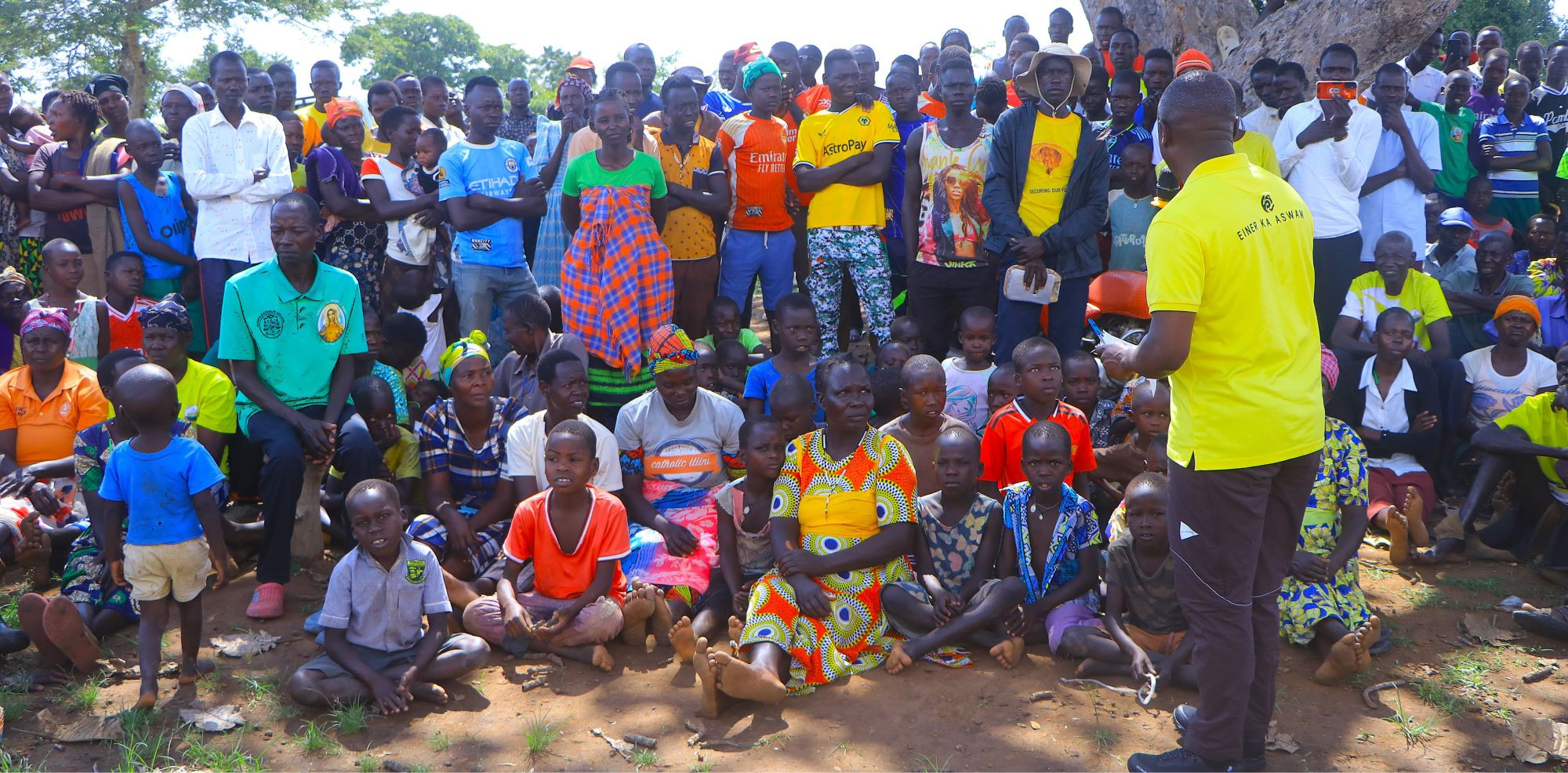
Speaking during a community engagement tour in Palam Sub- County on Saturday, October 4, 2025, Minister Ogwang, who also serves as Member of Parliament for Ngariam County, said the dams would not only contain floodwaters but also serve as a long-term resource for irrigation, livestock, and domestic water supply.
“Floods in Katakwi will come to an end once we are able to have dams that can hold this water,” Ogwang told hundreds of residents gathered at Aterai “I want local leaders to identify land where these dams can be constructed so that we stop crying every rainy season.”
For years, floods have been a recurring nightmare for the people of Katakwi. Sub-counties such as Palam, Ngariam, Okore, and Guyaguya, along with parts of Usuk County, face destructive rains almost every season. The floods often submerge homes, destroy crops, and displace families, leaving behind hunger and poverty.
The problem, according to local leaders, is largely due to the district’s sloping terrain and poorly drained soils, which fail to absorb rainwater. As a result, water runs off quickly and accumulates in low-lying areas, turning once-fertile farmland into shallow lakes.
Minister Ogwang explained that constructing community-based water dams would help control the flooding while turning disaster into opportunity. “This is not only a flood control project but a water security plan,” he said. “The same water that destroys homes today can sustain life if we store it properly.”
He emphasized that the initiative would also benefit cattle keepers from both Teso and neighboring Karamoja sub-region, promoting peace and cooperation across borders. “This will be a joint solution for both the Iteso and the Karamojong,” Ogwang added.
Ogwang’s visit came as residents grappled with yet another wave of floods, which have reached areas that had never previously been affected. Even Katakwi Town Council, once considered a safe zone, is now struggling with rising water levels.
In Katakwi Primary School, the situation has reached crisis level. Teachers, led by Deputy Head Teacher Simon Opio, said they are living in fear after their gardens and sanitation facilities were destroyed.
“Our crops have been washed away, and our latrines are flooded. Some have collapsed completely,” Opio said. “We fear that if this continues, diseases like cholera may break out.”
In Ngariam Primary School and Obulejet Primary School, latrines that were built just a year ago are already filled with water. The Head Teacher of Ngariam Primary, David Icumar, made an emotional appeal to the government for urgent support.
“If the government could help us with dams that can hold this water, we would live with hope again,” he said. “I’m worried about how we will manage our children when they return from the teachers’ strike — all our toilets are flooded.”
Meanwhile Geoffrey Omolo, the Katakwi District LC5 Chairperson, confirmed that the district leadership has submitted an emergency report to the Ministry of Disaster Preparedness requesting relief items such as food and tarpaulins for displaced families.
“We have appealed to the ministry to come to our people’s rescue,” Omolo said. “But we must also take responsibility by protecting our environment. Over-bush burning, deforestation, and improper waste disposal are worsening this situation.”
Omolo stressed that environmental restoration must go hand in hand with infrastructure development if Katakwi is to achieve long-term stability.
He notes that floods in Katakwi are part of a broader climate change pattern affecting many parts of eastern Uganda. The alternating cycles of prolonged drought and sudden heavy rainfall are overwhelming natural drainage systems and destroying livelihoods.
Minister Ogwang’s dam project, therefore, represents more than just a local infrastructure plan; it is part of Uganda’s growing effort to adapt to the realities of climate change.
To build lasting resilience, leaders and environmental specialists are calling for a mix of engineering, ecosystem restoration, and community-driven adaptation measures.
What are Possible solutions?
At the heart of Ogwang’s strategy is the construction of multi-purpose dams that capture excess rainwater and store it for use during dry seasons. Properly designed dams can reduce surface runoff, prevent floods, and provide reliable water sources for irrigation and livestock.
In regions like Teso, where drought often follows floods, this dual-purpose approach can turn a recurring disaster into a resource for growth. According to climate experts, such infrastructure if supported by local participation and scientific assessment will greatly reduce dependency on erratic rainfall.
Beyond physical infrastructure, environmental conservation offers a natural defense against floods. Wetlands act as sponges, absorbing rainwater and releasing it slowly into rivers and groundwater systems.
However, in many parts of Katakwi, wetlands have been drained or converted into farmland. Restoring these ecosystems could significantly reduce the impact of floods in low-lying areas like Palam and Ngariam. Environmental officers suggest that the government and communities should identify and rehabilitate critical wetland zones such as Apujan and Akoboi, which once served as natural flood barriers.
Another vital step is the restoration of vegetation cover. Trees prevent soil erosion, improve water absorption, and help regulate local temperatures. The widespread practice of bush burning and deforestation in Katakwi has left the land bare and unable to retain water.
Community tree-planting drives especially around schools, roads, and homesteads could reverse this damage. Whereas in Teso Non-government organizations have been of help in this area evidenced with the Trees for Life body that has been planting trees across schools with a vision to plant 25million across Teso and Karamoja subregions. Such reforestation efforts also contribute to global climate goals by capturing carbon from the atmosphere.
Since most residents in Katakwi depend on farming, floods and droughts have a direct impact on food security. Agricultural experts recommend that farmers adopt climate-smart agriculture, which focuses on practices that withstand weather extremes.
This includes planting flood- and drought-tolerant crops like cassava and sorghum, building raised garden beds to protect crops from floodwater, and practicing crop rotation and mulching to preserve soil fertility. With proper training, these techniques can help farmers continue producing food even when the weather becomes unpredictable.
Many disasters in Katakwi occur without warning. Communities are caught off guard, and emergency response often arrives too late. A reason why establishing early warning systems is essential as this would involve installing rain gauges, flood monitoring stations, and community-based alert networks. Local leaders could then inform residents of approaching floods, allowing timely evacuation and protection of property. Training village disaster committees in risk management and emergency response would further strengthen community resilience.
Sustainable change also requires strict enforcement of environmental and land-use regulations. Settlements in flood plains and wetland encroachments should be restricted, while waste management practices must improve to prevent clogging of drainage systems.
Geoffrey Omolo, the district chairperson, urged local leaders to cooperate with the National Environment Management Authority (NEMA) to implement these laws. “Everyone must respect nature’s boundaries,” he said.
At the same time, climate education should become a community priority. Schools and local radio stations can play a powerful role in spreading awareness about tree planting, proper waste disposal, and the dangers of bush burning.
Because Katakwi’s floods often originate from the Karamoja highlands, Minister Ogwang emphasizes the need for cross-border collaboration between the Teso and Karamoja sub-regions.
He said “Water does not know boundaries We need to plan together with our neighbors so that what flows from Karamoja does not destroy Teso, Joint projects, such as inter-district dams and shared grazing corridors, could reduce conflict and promote mutual benefit between pastoral and farming communities”
Deforestation, driven largely by the search for charcoal and firewood, remains a key driver of land degradation. Introducing renewable energy solutions, such as solar cooking and biogas, could reduce pressure on forests and improve household energy security.
Local cooperatives and women’s groups can lead the way by adopting solar stoves and promoting energy-saving technologies that align with Uganda’s green energy transition goals.
However, climate risk assessments should be mandatory in all local government development plans. Roads, schools, and housing projects must be built with drainage and elevation considerations to withstand future floods.
Training local engineers and planners to design climate-resilient infrastructure will save government resources in the long run, as facilities will no longer be destroyed every rainy season.
For decades, the people of Katakwi have lived in a cycle of disaster — floods destroy homes, relief aid arrives, and then the process repeats. Minister Ogwang’s proposed dam project and the accompanying environmental reforms represent a chance to break this cycle and move toward resilience.
But the success of these efforts will depend on more than government promises. It will require community participation, political will, and consistent investment in sustainable solutions.
As the minister concluded his visit to Palam, he left residents with a message of hope:
“We can turn this water from a curse into a blessing. Let us build together for our children, for our land, and for our future.”
If implemented effectively, the proposed interventions could transform Katakwi into a model of climate-smart development, a place where water sustains life rather than sweeping it away.
Related News



Advertisement

Advertisement
News Updates





Advertisement