
October 7, 2025 | 208 views
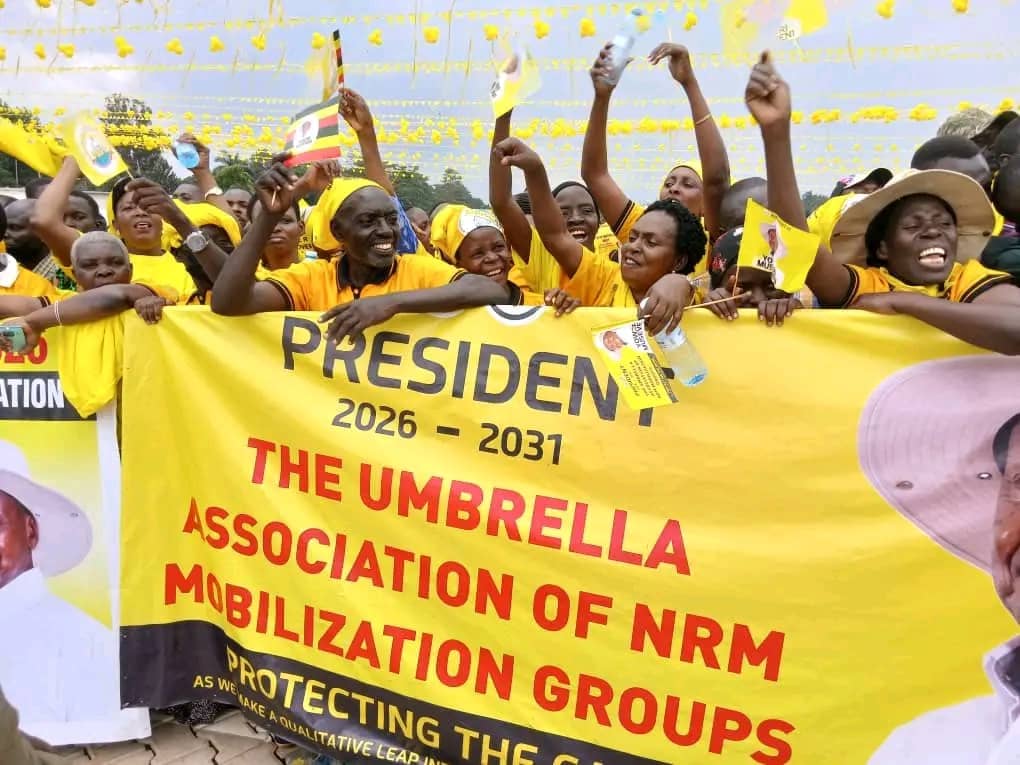
Kampala, Uganda – October 2025-The ruling National Resistance Movement (NRM) has unveiled a major shift in its campaign strategy ahead of the 2026 general elections, scrapping the traditional national task force model and placing the responsibility of delivering victory for President Yoweri Museveni squarely on the party’s grassroots structures.
A break with the past
In past elections, the NRM relied heavily on centralized campaign task forces, often led by senior party officials and ministers, to coordinate nationwide mobilization.
This time, however, the party has opted for a bottom-up approach, empowering local structures—from village committees to district executives—to spearhead voter mobilization.
According to NRM Secretary General Richard Todwong, the new model is designed to maximize the party’s organizational strength at the community level.
Each member of the NRM’s grassroots structure has been tasked with securing at least three to four votes for President Museveni.
The party is targeting 13 million votes in total, which it believes will secure a decisive victory.
“We tested this during the signature collection exercise for President Museveni’s nomination. Village leaders were asked to bring in just two additional supporters each, and the results were overwhelming. This is the model we are now scaling up,” Todwong explained.
A closer look into the New NRM campaign strategy
– Village-Level Mobilization: Every NRM village chairperson and committee member is expected to directly engage households, ensuring loyalty and turnout.
– Decentralized Messaging: Instead of relying on national rallies, local leaders will spread the NRM’s message through community meetings, door-to-door campaigns, and small gatherings.
– Accountability at the Base: Each grassroots leader will be evaluated based on the number of votes delivered in their locality.
– Reduced Reliance on Central Task Forces: The central secretariat will provide guidance and resources but will not dominate campaign operations.
While NRM leaders have praised the strategy as a way to “return power to the people,” opposition figures have expressed skepticism. Ibrahim Ssemujju Nganda, spokesperson for the People’s Front for Freedom, argued that relying on party structures does not guarantee votes.
He pointed to past by-elections where NRM claimed large membership numbers but performed poorly at the ballot box. “Having structures is one thing; converting them into actual votes is another,” he said.
What the change in campaign strategy means for 2026 general elections
The shift signals a leaner, more localized campaign for President Museveni, who is seeking a seventh elective term. Analysts suggest the strategy could:
– Strengthen NRM’s hold in rural strongholds where grassroots networks are strongest.
– Reduce campaign costs by minimizing large rallies and central task force operations.
– Test the loyalty and effectiveness of NRM’s vast local machinery.
However, the approach also carries risks. If grassroots leaders fail to mobilize effectively, the party could face unexpected setbacks, especially in urban areas where opposition parties have been gaining ground.
Related News
Advertisement

Advertisement
News Updates



Advertisement